


Description
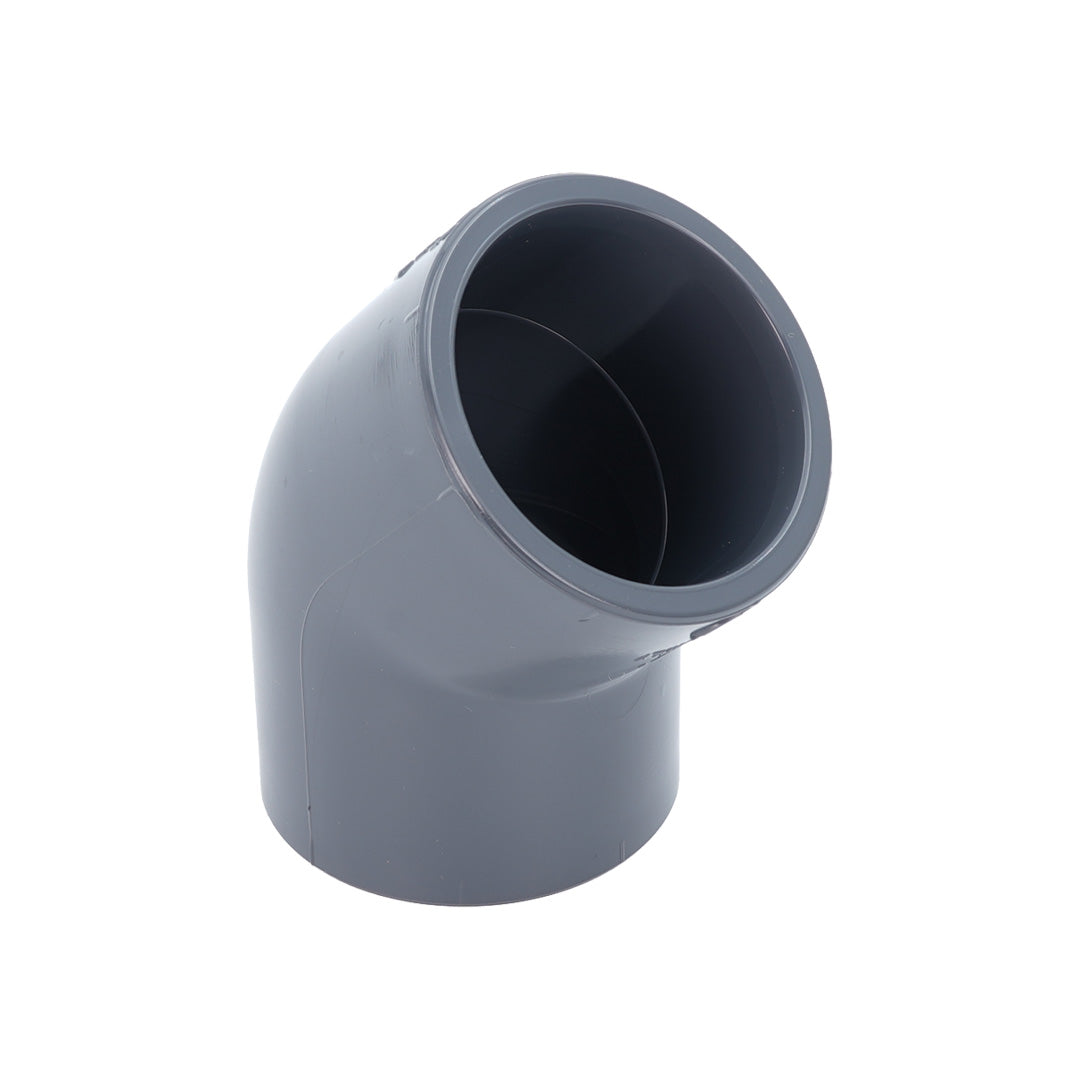
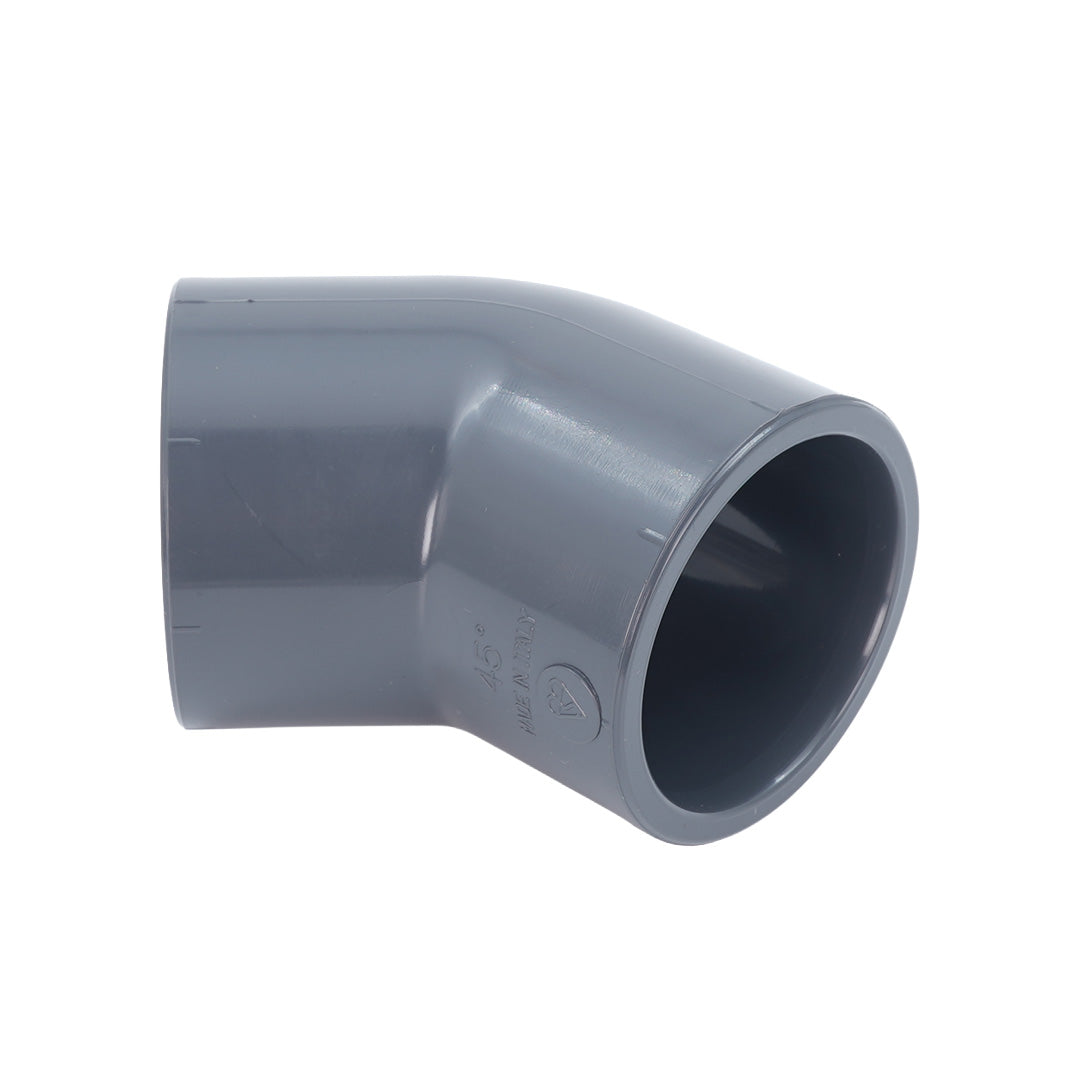
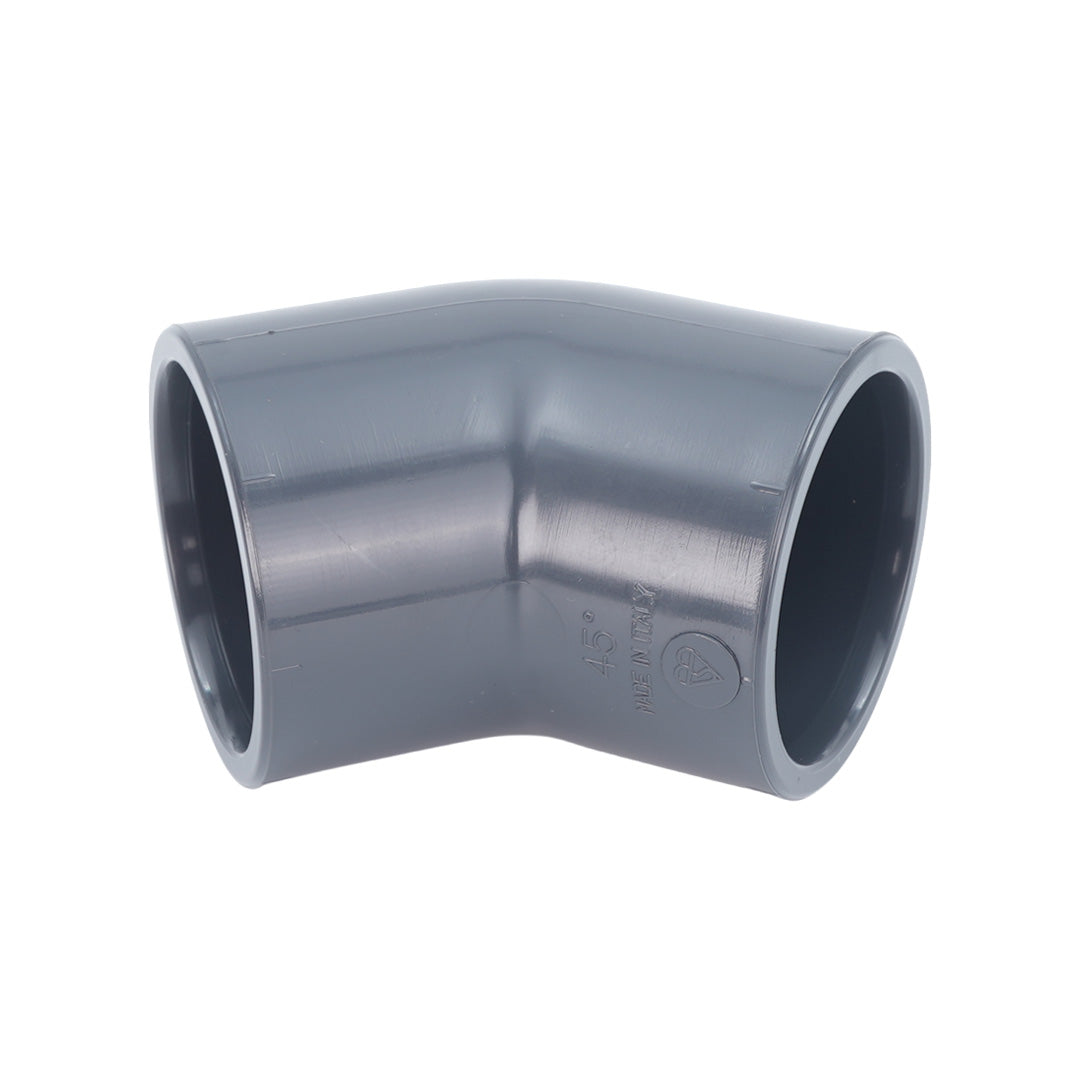
Imperial PVC 45° Elbow
The Imperial PVC 45° Elbow is designed to change the direction of an imperial PVC pipe run by 45 degrees, providing a smoother flow path than a 90° fitting. Suitable for solvent weld pipe systems, it creates a permanent, pressure-tight joint when installed with the appropriate PVC solvent cement.
Manufactured from rigid PVC, these fittings offer excellent resistance to corrosion, scaling and many chemicals, making them suitable for water treatment, irrigation, swimming pools, process pipework and a wide range of industrial applications.
Imperial Solvent Weld Pipe Sizes
Imperial PVC pipework is identified by its nominal bore (NB). The fitting socket is manufactured to match the outside diameter of the corresponding imperial pipe.
| Nominal Pipe Size | 1/2" | 3/4" | 1" | 1 1/4" | 1 1/2" | 2" | 2 1/2" | 3" | 4" |
|---|---|---|---|---|---|---|---|---|---|
| Pipe Outside Diameter (mm) | 21.4 | 26.7 | 33.6 | 42.2 | 48.3 | 60.3 | 75.2 | 88.9 | 114.3 |
Approximate BSP Thread Sizes
If your installation includes threaded fittings, the table below shows the approximate outside diameter of standard male BSP threads for each nominal pipe size.
| BSP Thread Size | 1/2" | 3/4" | 1" | 1 1/4" | 1 1/2" | 2" | 2 1/2" | 3" | 4" |
|---|---|---|---|---|---|---|---|---|---|
| Approx. Diameter (mm) | 21.0 | 26.4 | 33.2 | 41.9 | 47.8 | 59.6 | 75.2 | 87.9 | 113.0 |
Product Benefits
- Creates a 45° change in direction for imperial PVC pipework.
- Suitable for solvent weld pressure systems.
- Rigid PVC construction with excellent corrosion resistance.
- Smooth internal bore helps maintain efficient flow.
- Suitable for water treatment, irrigation, swimming pools and industrial installations.
- Quick and straightforward installation using PVC solvent cement.
Working Pressure
Imperial PVC solvent weld fittings are rated to a maximum working pressure of 15 bar (215 psi) at 20°C. As the operating temperature increases, the maximum working pressure decreases. PVC pipe systems should not be used at temperatures exceeding 60°C.
Installation Guidance
Ensure both the pipe and fitting are clean and dry before applying solvent cement. Push the pipe fully into the socket with a slight twisting action to achieve an even bond. Leave sufficient curing time before pressure testing or putting the system into operation.